

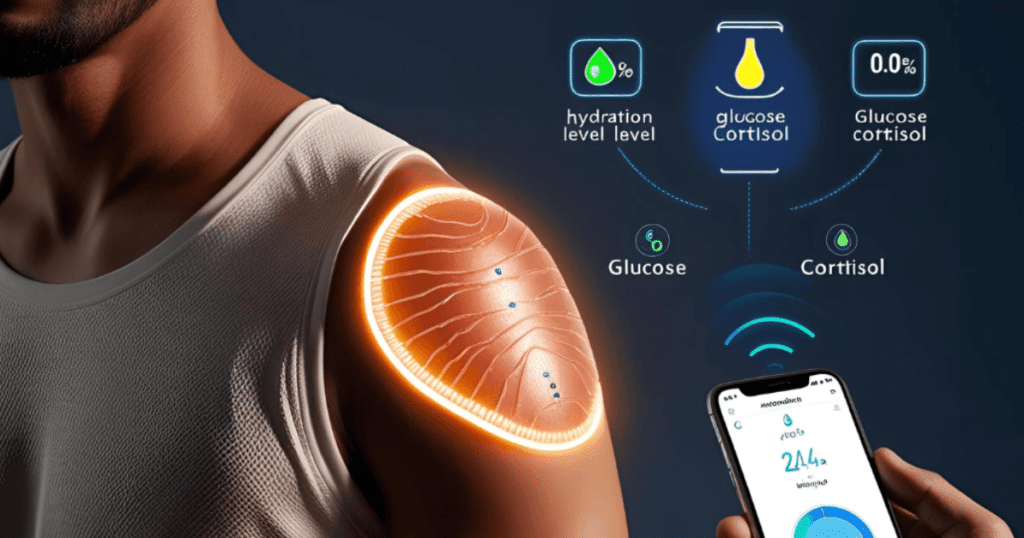
Sweat isn’t just something to wipe off—it’s a biochemical message. A new research review argues that sweat could become a needle-free health monitoring channel, especially as wearable sensors and AI get better at reading complex patterns.
The idea: ultra-thin patches collect sweat continuously, then use advanced sensors (and eventually AI models) to interpret what’s inside—things like electrolytes, hormones (like cortisol), and potentially even markers tied to disease risk or medication levels.
This isn’t purely futuristic. Basic sweat tools already exist, like single-use patches that estimate sweat rate and sodium loss. What’s changing now is the tech stack: microfluidics, stretchable electronics, wireless transmission, and AI pattern recognition—all pushing sweat analysis beyond “hydration guidance” toward “early warning signals.”
Reality check: most of the most powerful use-cases are still emerging and need validation (accuracy, privacy, clinical relevance). But the direction is clear: wearables may soon move from tracking steps and heart rate to tracking chemistry—turning everyday sweat into something closer to a passive health dashboard.
