

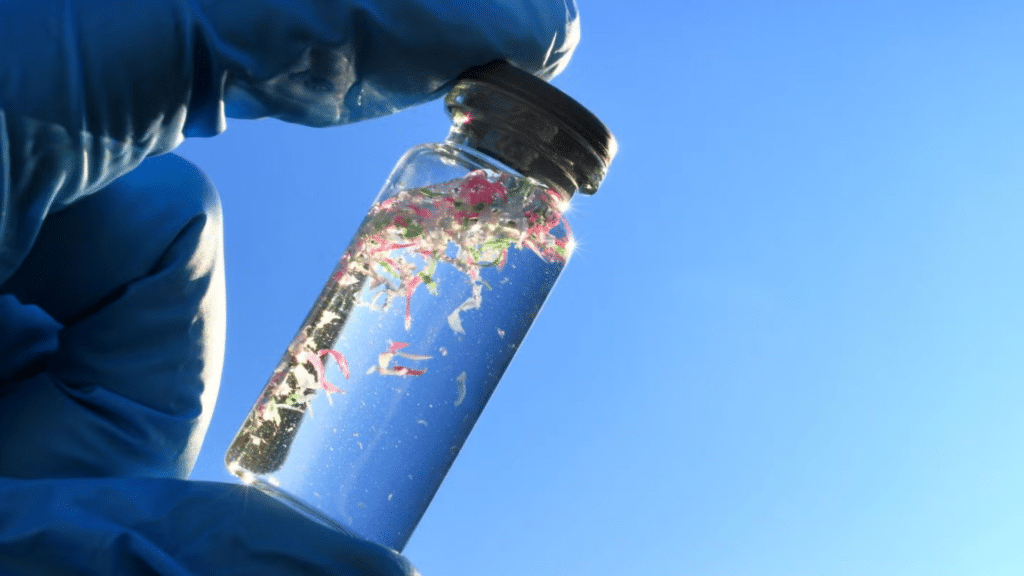
The breakthrough (and why it’s different)
Scientists can find microplastics—but following their journey inside living systems is the hard part. Many detection tools require destructive sampling, which turns a living process into a single snapshot.
The new proposal: create micro/nanoplastics with fluorescence built into the material (instead of dyes that fade or leak), enabling more stable imaging as particles move, change, and fragment.
Why this matters (for normal humans, not just labs)
Microplastics are already being detected widely, including in human tissues per reporting.
But “we found it” is not the same as “we know what it does, at what dose, over what timeframe.”
Better tracking tools help science answer the questions that actually guide policy and personal decisions:
- Where do particles accumulate?
- Do they break down or persist?
- Which sizes/chemistries matter most?
What this means (low-regret takeaways)
No panic required—just smart defaults:
- Don’t heat plastic when you can avoid it (hot food + plastic is a common exposure path).
- Ventilate during high-heat cooking (reduces airborne particles generally).
- Pick one easy swap you’ll keep (e.g., glass/stainless for your most-used container).
Promising-but-early note
This paper is a method/strategy proposal to improve real-time tracking—not proof of harm by itself. Its value is accelerating better-quality studies that can separate risk from noise.
