

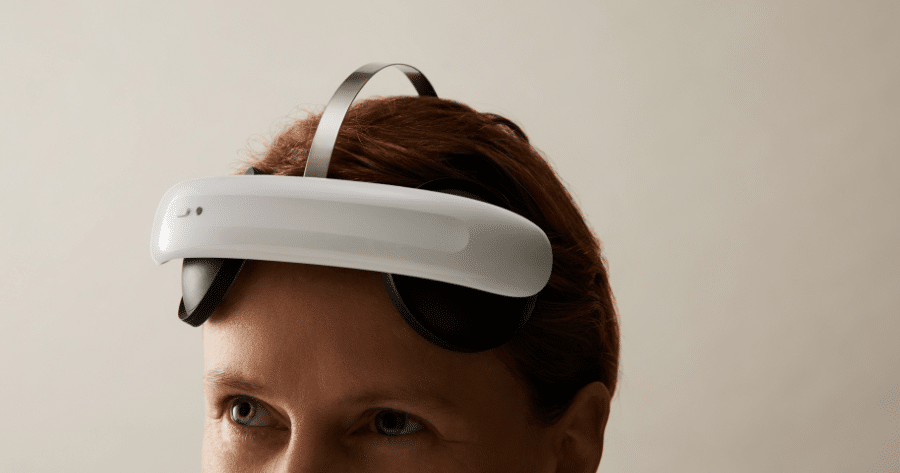
Depression therapy goes high-tech at home. U.S. regulators have approved the first at-home brain stimulation device to treat depression, offering a drug-free alternative to medications. Developed by Flow Neuroscience, the FL-100 headset delivers gentle electrical pulses to the part of the brain that regulates mood. With depression rates in the U.S. surging ~60% over the past decade (over 20 million adults affected), this wearable aims to provide relief without the side effects long tied to antidepressant pills.
In clinical trials, 58% of patients achieved remission after 10 weeks of using Flow’s device. The headset is intended for adults with moderate to severe depression who are not medication-resistant, and it can be used on its own or alongside therapy and meds. Patients wear the device via scalp electrodes for 30-minute sessions, five times a week for the first three weeks, then two to three sessions per week for the next nine weeks. This 12-week at-home program is guided by remote supervision from healthcare providers.
Real-world results are promising. The FL-100 device has already helped over 55,000 people across Europe, the UK, and other regions. In a mid-stage study, 58% of users went into full remission after 10 weeks, even though many were on medication or therapy. Globally, about 77% of users report feeling improvement within just three weeks of starting treatment – a rapid response that highlights the technology’s potential.
Coming soon (and reasonably accessible). Flow Neuroscience plans a U.S. launch for the device by mid-2026, as a prescription-only treatment. The anticipated cost is $500–$800 per unit, and the company is already in talks with insurance providers to help cover it by early 2026. The goal is to make this innovative therapy broadly available. “Flow’s FDA approval is a watershed moment for depression treatment – the first step in moving from pharmaceutical treatments to tech-based therapies with minimal side effects,” says Erin Lee, Flow’s chief executive. As a non-drug option, side effects so far appear mild and temporary (slight skin irritation or tingling at electrode sites), especially compared to traditional medications.
Why it matters: This new wearable could mark a major shift in mental health care. A treatment once confined to clinics can now be delivered in the comfort of home, potentially expanding access for those who need it. For millions living with depression, a lightweight headset that safely “zaps” away symptoms might just be a game-changer – offering hope for better days ahead without relying solely on pills.
