

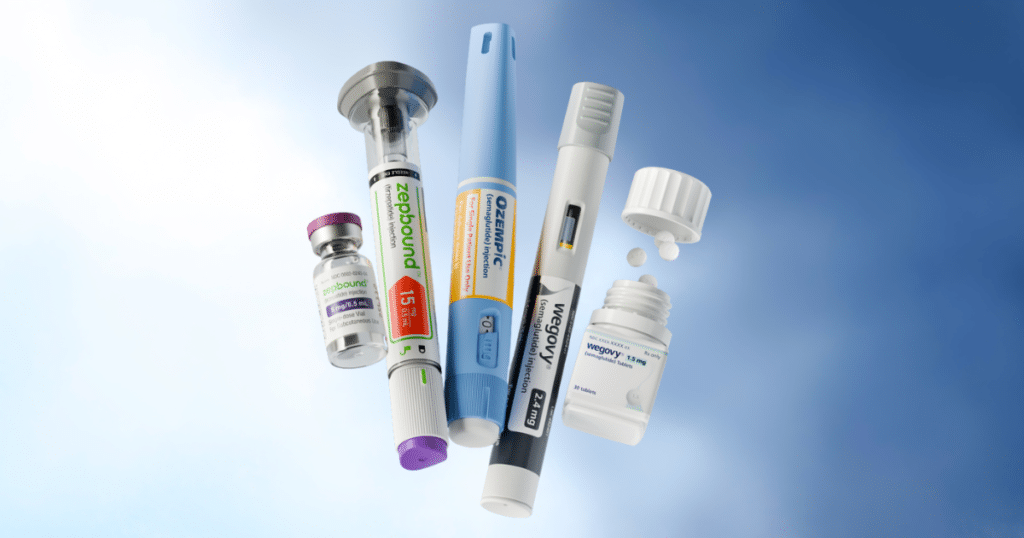
“GLP-1” has basically become shorthand for weight-loss meds. But a newer label is popping up: “GLP-3.” It’s not an official medical term—it’s a nickname for triple-hormone receptor agonists that target GLP-1 + GIP + glucagon in one weekly injection.
The most talked-about example right now is retatrutide (investigational, not yet approved).
What makes “GLP-3” different?
- GLP-1 helps reduce appetite and improves glucose control.
- Dual agonists (GLP-1 + GIP) add a second “satiety/metabolic” lever.
- Triple agonists add glucagon receptor activity to the mix—another pathway that may shift how the body uses energy.
What the new trial headline actually says
In a Phase 3 trial (TRIUMPH-4) involving adults with obesity/overweight and knee osteoarthritis (without diabetes), Lilly reported that participants receiving retatrutide (12 mg) lost an average of 28.7% of body weight at 68 weeks (as an adjunct to healthy diet and physical activity).
That’s a striking number—but it’s topline company-reported data. Full peer-reviewed publication, detailed safety breakdowns, and broader real-world evidence are still essential.
Promising, but early (why you should keep your skepticism on)
- Not approved yet: Retatrutide remains investigational.
- Side effects matter: Drugs in this category commonly involve GI effects, and discontinuation rates can be influenced by tolerability (details vary by trial).
- Long-term questions: Maintenance, safety over years, and outcomes beyond weight (sleep, heart risk, muscle mass) require more data.
“GLP-3” is an intriguing next step in obesity medicine—worth watching, not worshiping.
If you’re curious because you’ve struggled with appetite, cravings, or weight regain, here’s the grounded takeaway:
- Don’t chase “research chemicals.” If something is investigational, buying it outside medical channels is risky.
- Talk to a clinician about the full toolbox. Meds can be helpful for some people, but screening, follow-up, and side-effect management are the difference between “works” and “wrecks my week.”
- Protect muscle while losing weight. If you’re losing weight rapidly (with or without meds), resistance training and protein adequacy become more important, not less.
