


Here’s a surprising research headline that’s actually motivating in a practical way: a short burst of intense exercise may create measurable changes in the bloodstream that affect cancer-related pathways—at least in lab testing.
What researchers tested
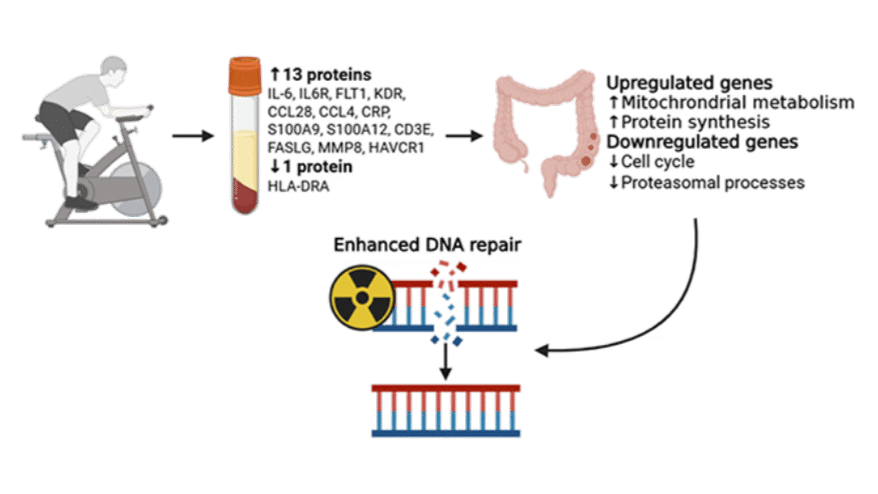
In one study, 30 adults (ages ~50–78) who were overweight/obese but otherwise healthy completed a short, hard cycling test lasting about 10 minutes. Blood was collected before and after. Researchers then exposed colon cancer cells in the lab to the post-exercise serum and tracked what changed.
What changed
After exercise, the blood showed shifts in proteins and signals. When applied to colon cancer cells, researchers observed changes in activity across 1,300+ genes, including signals tied to:
- DNA repair
- energy metabolism
- cancer cell growth/proliferation
The paper discusses effects consistent with enhanced DNA repair (including a DNA repair gene called PNKP) and reduced “growth” signaling in the cancer cells.
What this does—and doesn’t—mean
This does not mean “10 minutes of exercise treats cancer.” It’s a mechanistic clue: one reason exercise is linked to lower colorectal cancer risk may be the bloodstream signals exercise produces.
The practical takeaway
If you’re starting 2026 trying to rebuild consistency, this is encouraging: small doses can matter. You don’t need perfect. You need repeatable. A short, intense session may send meaningful “repair and resilience” signals through the body—one more reason movement is a long game worth playing.
